 WhatsApp Us


In the UK, Ofqual-regulated qualifications carry value because their standards are clearly defined and consistently applied. These qualifications provide training that helps learners gain advanced skills. They are built on approved frameworks, fixed Total Qualification Time (TQT), structured Guided Learning Hours (GLH), and assessment methods that are monitored rather than improvised. Every element, from delivery to grading, follows agreed requirements.
Key Takeaways:
- Regulated qualifications gain their value from clearly defined frameworks, structured learning time, and controlled assessment practices, ensuring consistency, fairness, and credibility across all centres.
- Effective training reflects awarding body rules, qualification level, learner readiness, delivery method, assessment design and support.
- Continuous monitoring, adjustment during delivery, and post-course review help providers maintain compliance, strengthen learner outcomes and preserve confidence in regulated qualifications.
A regulated qualification is not simply about gaining a certificate. It reflects a system where learning outcomes are set in advance, assessment decisions are checked, and learners receive appropriate guidance and support throughout their studies. These measures protect the credibility of the qualification itself.
This blog explores what makes a regulated qualification a genuine marker of quality and why these standards matter for learners, providers, and employers alike.
How Learning Happens in the UK Regulatory Framework?
Learning within the UK regulatory framework occurs in a planned, structured manner. Learners are expected to complete the qualification to demonstrate the required knowledge, skills, and understanding. It reflects learning that is organised, supported, and directed by the approved training provider, rather than informal or unstructured study.
Ofqual regulates qualifications, examinations, and assessments to ensure standards are maintained and learners can have confidence in the outcomes they achieve.
In the UK framework, the amount of learning is closely linked to:
- Guided Learning Hours (GLH)
- Total Qualification Time (TQT)
- Delivery and Assessment Strategy
This learning represents a reasoned judgement about how much structured learning is required for a particular learner cohort to meet the qualification outcomes at the appropriate level. This judgement considers the content's complexity, the assessment approach, and the level of guidance and support provided.
Read more What Are Guided Learning Hours in Vocational Qualifications?
What Structured Learning Includes?
Structured learning in a regulated qualification typically covers:
- Tutor-Led Learning: Classroom, workshop, or online teaching sessions guided by a qualified tutor, aligned with the qualification content.
- Digital Learning Resources: Online modules, recorded sessions, or learning platforms released in a planned way and linked to learning activities.
- Managed Tasks: Centre-planned digital activities such as guided modules, set tasks, or e-learning with tutor oversight and feedback.
- Practical Activities and Skills Development: Workshops, demonstrations, simulations, and supervised practice designed to support assessment outcomes.
- Assessment-Related Activities: Assignments, projects, and tasks integrated into the learning programme, supported through guidance, feedback, or formative assessment.
- Structured Workplace Learning (where applicable): Planned, supervised workplace learning linked to assessment criteria counts as structured learning.
Structured learning excludes unsupervised or informal activities, such as independent revision, personal reading, or practice without direction or feedback. These activities support learning but are reflected in the TQT rather than structured learning hours
Why Meeting the Standards of Learning Matters in Ofqual-Regulated Qualifications?
Meeting learning standards is essential for Ofqual-regulated qualifications. It protects the integrity of the qualification and ensures that every learner is assessed against the same expectations, regardless of where or how the qualification is delivered in the UK.
Ofqual expects qualifications to be valid, reliable, and fit for purpose. This is why every qualification includes appropriate GLH, realistic TQT, valid assessment methods, and clear arrangements for tutor guidance and learner support.
Qualifications must be designed to enable valid assessment of the knowledge, skills and understanding being measured.
Source: Ofqual General Conditions of Recognition
Adherence to standards benefits all stakeholders:
Learners: Confidence that their achievement reflects genuine competence.
Employers and Progression Providers: Assurance that the qualification represents a defined level of knowledge and skills.
Centres: Supports compliance, quality assurance and long-term credibility within the regulated system.
Ofqual-regulated qualifications require centres to deliver learning and assessment in line with approved specifications. These standards ensure that learners have a fair opportunity to achieve the stated learning outcomes at the correct level. Moreover, this reduces the risk of under-delivery, over-assessment or inconsistent judgment, all of which can undermine the value of a qualification.
What are the Factors that Influence the Training and Learning in Accredited Qualifications?
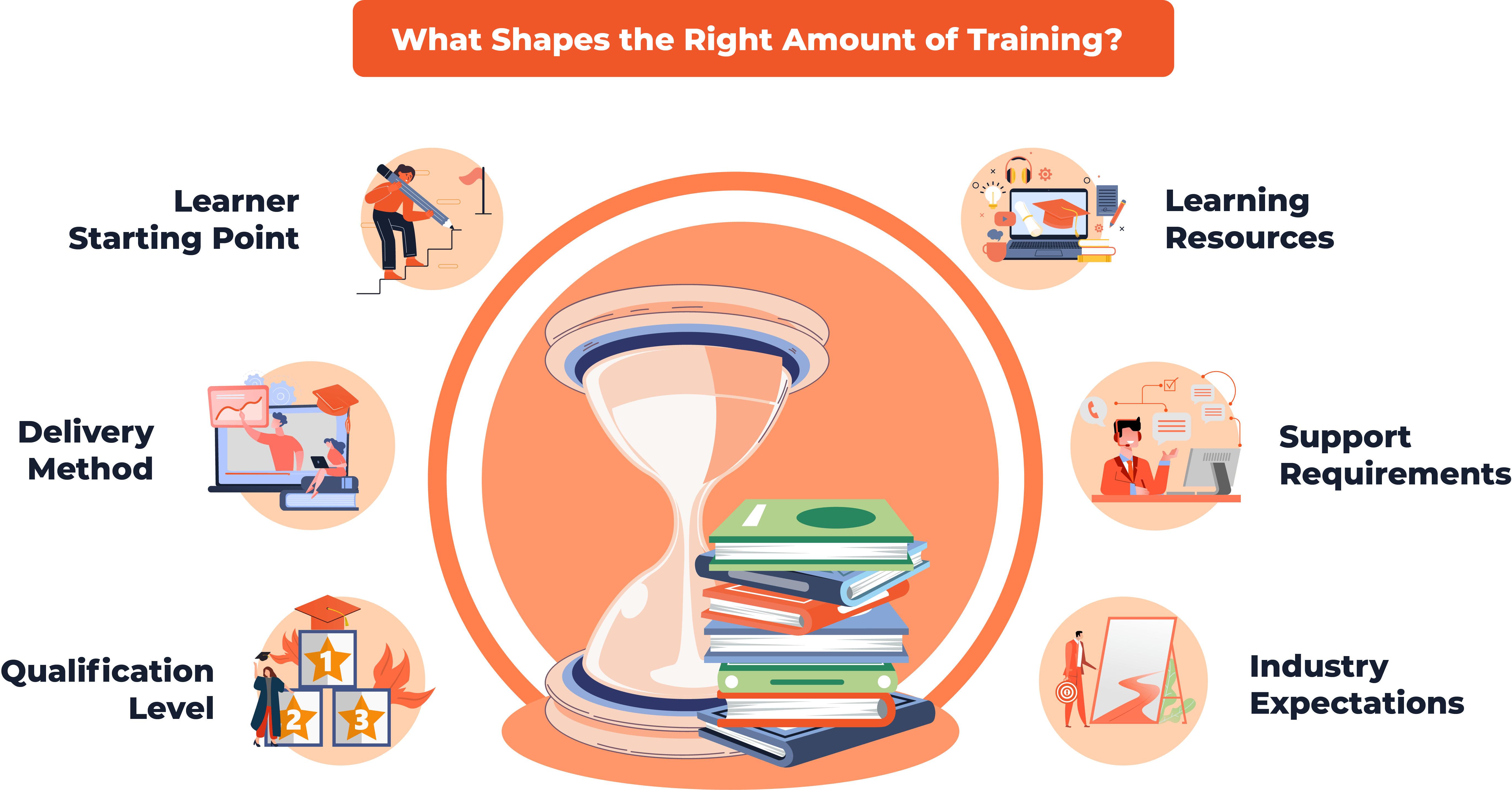
Training and learning are shaped by several interconnected factors to ensure meaningful outcomes. A single learning method is not suitable for everyone; it must be shaped by several interconnected factors that ensure meaningful learning. Below are the key factors that influence training and learning:
1. Awarding Body Requirements
Qualifications must meet standards set by awarding organisations and regulators such as Ofqual. These define learning outcomes, assessment criteria, minimum GLH or TQT, and acceptable assessment methods.
2. Qualification Level
The level of a qualification determines the complexity of knowledge and skills, learner autonomy, and balance between theory and practical application. Lower-level qualifications focus on foundational knowledge, while higher-level qualifications demand critical thinking and independent study.
3. Learner Profile
Training must reflect learners' prior knowledge, literacy, numeracy, digital skills, and occupational experience. Entry requirements ensure learners are suitably prepared for training demands.
4. Mode of Delivery
Classroom, online, blended, work-based, or distance learning all influence interaction, support, assessment timing, and learner engagement. Equivalent learning outcomes must be achieved regardless of delivery mode.
5. Assessment Strategy
Assessment shapes learner engagement. Types include written assignments, practical assessments, observations, professional discussions, and reflective accounts. Constructive feedback guides improvement and ensures standards are met.
6. Learning Resources
Structured course materials, sector-relevant content, and digital platforms support independent learning and reinforce taught sessions.
7. Supported Learning Environment
Academic and pastoral support, clear guidance, and reasonable adjustments improve retention, confidence, and achievement.
REGULATORY INSIGHT
Ofqual does not regulate course speed. It regulates whether learners are given sufficient, structured opportunities to achieve and demonstrate competence.
The following is a brief overview of how different learner contexts influence the training approach and the amount of time required for learning.
| Learner Context | Training Approach | Impact on Training Time |
|---|---|---|
| Experienced professional | Recognition of prior learning plus targeted support | Reduced |
| Career transition learner | Full structured delivery | Standard |
| New entrant | Extended teaching and support | Increased |
Adjusting Training During Delivery: A Quality Practice
Effective providers do not treat training plans as fixed. Monitoring learner progress and adjusting support during delivery are hallmarks of quality provision.
Monitoring learner progress during delivery is a fundamental expectation within quality-assured provision. When learners require additional support, providers may adjust the training by offering additional teaching sessions, tailored academic support, or alternative learning resources. These adjustments demonstrate responsiveness to learner needs and contribute to positive outcomes, provided they are clearly recorded and reviewed as part of internal quality assurance processes.
Quality Assurance Focus
Adjusting training during delivery is a sign of learner-centred provision and effective quality assurance, not poor planning.
Reviewing and Improving Training After Delivery
Effective providers evaluate each cohort and refine future delivery. Post-delivery evaluation enables providers to assess the effectiveness of the training delivered.
"Awarding organisations must review their qualifications and make changes where necessary to maintain validity and effectiveness."
Source: Ofqual Handbook
By analysing learner outcomes, assessment decisions, and feedback, providers can refine future delivery models and ensure training volume remains appropriate and evidence-based. This ensures:
- Continuous improvement
- Better learner outcomes
- Stronger alignment with awarding body guidance
- Evidence-based quality assurance
This review and improvement cycle supports ongoing compliance with Ofqual expectations and enhances learner confidence in the qualification.
Conclusion
In the UK education system, the amount of training in Ofqual-regulated qualifications exceeds the minimum requirements. It is about providing learners with sufficient, structured, and purposeful learning opportunities to achieve genuine competence. Well-designed training reflects informed judgement, learner-centred planning, and a commitment to quality, principles that underpin credible and respected qualifications across the Further Education sector.